


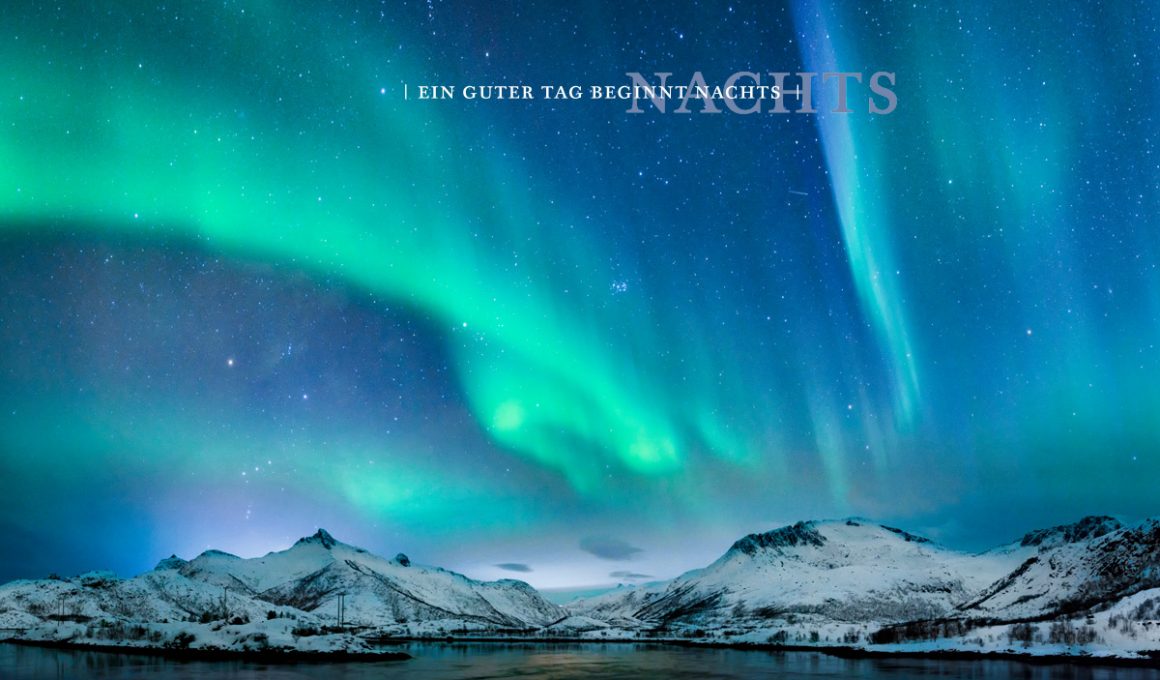
Green veils of light sweep across the night sky, changing shape and sometimes even glowing red or violet. The Northern Lights are among the most impressive natural phenomena on Earth. Sometimes they appear as delicate bands of light on the horizon; other times, their shifting colors illuminate large swaths of the sky. Especially in the far north, this extraordinary spectacle attracts numerous people every year. Anyone who has experienced these fascinating light displays with their own eyes is unlikely to forget the sight anytime soon. For the chance to witness the Northern Lights, many are therefore happy to sacrifice a few hours of sleep.
Do the Northern Lights disrupt our sleep?
Whether the Northern Lights have an effect on our sleep, regardless of whether we observe them at night, remains largely unclear. While there is no scientific evidence that the lights themselves disrupt our sleep, the Northern Lights are linked to changes in the Earth’s magnetic field. For this reason, researchers are investigating whether such geomagnetic fluctuations can also influence biological processes in humans.
A few small studies suggest a possible link between geomagnetic activity and the sleep hormone melatonin. However, the available data are not yet sufficient to draw reliable conclusions about the effects on our sleep quality.
Why Nights with the Northern Lights Can Keep You Awake
Watching the Northern Lights at night can have a much more noticeable effect on our sleep than any potential geomagnetic influences. People waiting for this natural spectacle often stay awake well past midnight. They check forecasts, drive to remote vantage points, or wait for hours for a break in the clouds.
If watching the northern lights at night leads to several short nights in a row, a sleep deficit can develop. The consequences range from fatigue and difficulty concentrating to reduced performance.
Added to that is the excitement following a successful sighting. Anyone who has just witnessed an extraordinary natural spectacle may find it harder to calm down.
What are the Northern Lights, and how do they form?
The aurora is caused by the interaction of the solar wind, the Earth’s magnetic field, and the Earth’s atmosphere. The Sun continuously emits electrically charged particles into space. Some of these particles reach the vicinity of Earth and interact with its magnetic field. As a result, electrons can travel along the magnetic field lines into the upper layers of the atmosphere. When they encounter oxygen and nitrogen there, they produce the characteristic glow of the aurora. The colors that appear depend, among other things, on the gases involved and the altitude. Most often, the aurora appears green, though occasionally it also glows red, blue, or violet.
In the Northern Hemisphere, they are called Northern Lightsor Aurora Borealis; in the Southern Hemisphere, they are called Southern Lights or Aurora Australis. Both phenomena are based on the same physical processes.
When and where is the best time and place to see the Northern Lights?
The best chances of seeing the Northern Lights are in Northern Norway, Swedish Lapland, Finland, Iceland, and Greenland, as well as in Alaska and Northern Canada. In many of these regions, the viewing season runs roughly from September through March or April. The key factors are sufficiently dark nights, a sky that is as cloud-free as possible, and minimal light pollution.
The Northern Lights can appear at various times of the night. The hours around midnight are often particularly favorable. However, their intensity can only be predicted to a limited extent. Therefore, anyone who wants to observe the Northern Lights will need not only good conditions but also a little patience.
Solar Maximum: Why the Chances of Seeing the Northern Lights Are Good Right Now
The Sun goes through an activity cycle that lasts an average of eleven years. During what is known as the solar maximum, there are a particularly large number of sunspots and more frequent intense eruptions. These can trigger geomagnetic storms, which cause the auroras to become more intense and spread over larger areas.
The current solar cycle reached its peak in October 2024. But the Sun remains active even after that: Even as solar activity gradually declines, strong geomagnetic storms can occur and produce spectacular auroras.
Can you see the Northern Lights in Germany, too?
In recent years, there have been several impressive instances demonstrating that the Northern Lights can also be seen over Germany. During strong geomagnetic storms, this colorful celestial spectacle has at times extended far into southern Germany.
To the naked eye, the Northern Lights often appear much fainter here than they do in photographs. Instead of vivid colors, sometimes all that can be seen are pale veils of light or a faint glow in the sky. Cameras can capture the colors much more vividly using longer exposure times.
The best viewing conditions are found in dark locations with an unobstructed view to the north. Current aurora forecasts, which are based in part on measurements of geomagnetic activity, are also helpful.
The Northern Lights, the Polar Night, and the Body Clock
Anyone who travels far north to see the Northern Lights will encounter extraordinary lighting conditions in winter. The hours of daylight are greatly reduced there. During the polar night, the sun even remains completely below the horizon at times north of the Arctic Circle.
These changes in light-dark conditions can affect our internal clock. In our article, we explain in detail why our sleep responds to light and what unique characteristics the polar regions present: Midnight Sun, Polar Day, and Polar Night: How They Affect Our Sleep.
Watch the Northern Lights and Still Get a Good Night’s Sleep
If you want to see the Northern Lights, you sometimes have to stay up late. With a little planning, however, you can avoid letting these nighttime excursions lead to a significant sleep deficit.
- Plan for sleep: After a long night of northern lights, you should allow yourself as much time as possible to sleep in the next morning. If you want to watch the northern lights for several nights in a row, be sure to plan for enough sleep in between.
- Making the Most of Aurora Forecasts: Up-to-date forecasts of geomagnetic activity and cloud cover help you choose nights with the best chances for viewing. While this doesn’t eliminate the wait, it can help you avoid unnecessarily long nighttime trips.
- Take short breaks: After a short night’s sleep, a nap of about 30 minutes can improve alertness. However, it is no substitute for a full night’s sleep.
- Unwind after watching TV: Dim lighting and a quiet environment make it easier to transition to sleep. A comfortable pillow that suits your preferred sleeping position can also help you relax after a long night.
After several hours in the winter cold, a cozy bed is especially welcome. A billerbeck duvets that’s suited to the room temperature and your personal warmth needs ensures a comfortable sleeping environment and sets the stage for a restful night’s sleep.