
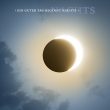

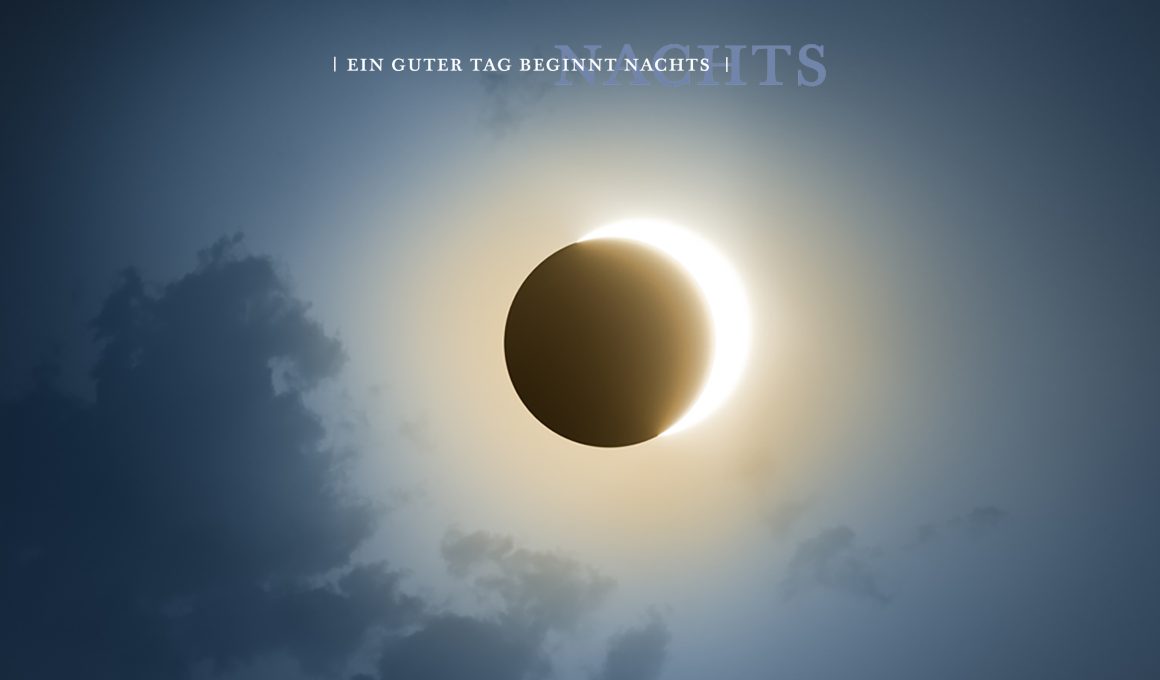
When the Moon passes in front of the Sun, daylight briefly turns to twilight. Animals sometimes change their behavior—but what happens to our sleep? We explain the connection between solar eclipses and sleep, what science has to say about it, and how you can safely observe the celestial spectacle in Germany on August 12, 2026.
What exactly is a solar eclipse?
A solar eclipse occurs when the Moon passes between the Sun and the Earth and casts its shadow onto the Earth. Depending on the Moon’s position and distance, experts distinguish between three types:
- During a total solar eclipse, the Sun’s disk is completely obscured by the Moon.
- During a partial solar eclipse, part of the Sun remains visible.
- During an annular solar eclipse, the Moon appears slightly smaller than the Sun. As a result, a bright ring of sunlight remains visible.
Whether a solar eclipse is total, partial, or annular always depends on the location from which it is observed.
Solar Eclipses and Their Impact on Sleep: What Do We Know?
Light is the most important external cue for our internal clock. Bright daylight promotes alertness and helps maintain a stable sleep-wake cycle. As it gets darker in the evening, the body’s natural production of melatonin typically increases, and we start to feel sleepy.
However, this does not mean that a solar eclipse automatically disrupts sleep. The eclipse lasts only a short time, and in Germany in 2026, it will occur in the evening anyway. Based on current research , there are no reliable human studies that demonstrate a direct impact of a solar eclipse on sleep duration, deep sleep, or sleep quality.
Indirect effects are nevertheless possible: Anyone who travels to see the event, stays up late, is excited, or spends a lot of time afterward looking at photos and news on their smartphone may alter their usual evening routine. It is not the solar eclipse itself, but rather the behavior surrounding the event that could then make it difficult to fall asleep.
What do recent studies say?
An observational study published in 2026 examined the relationship between light exposure and sleep in 21 adults over a seven-day period. Each additional hour of daylight exposure exceeding 1,000 lux was statistically associated with about 11 more minutes of sleep the following night. Smartphone use shortly before bedtime, on the other hand, was associated with a longer time to fall asleep. Due to the small sample size, the study shows correlations but does not prove causation—and it did not examine a solar eclipse.
A study published in *Science* in 2025 also showed that numerous bird species altered their vocalizations during the total solar eclipse of 2024. Some reacted to the return of light in a manner similar to that of a new dawn. However, these findings cannot be directly applied to human sleep.
How to Get a Good Night’s Sleep Despite the Solar Eclipse
From a sleep medicine perspective, no special preparation is necessary. Established sleep habits will also help on this special evening:
- Stick to your usual bedtime as much as possible.
- Plan your trip there and back well in advance so you won’t be rushed.
- After the observation, allow yourself a quiet transition period.
- Then set your smartphone and camera aside.
- Make sure your bedroom is dark, quiet, and at a comfortable temperature for sleeping.
That way, the solar eclipse remains a fascinating experience—and the night that follows is restful.
The Solar Eclipse on August 12, 2026, in Germany
The solar eclipse will be visible only partially in Germany. Depending on the location, it will begin between approximately 7:11 p.m. and 7:23 p.m. The maximum phase will be reached between approximately 8:06 p.m. and 8:15 p.m. In select cities, approximately 85 to 89 percent of the sun’s disk will be obscured; in the far southwest, this percentage may be slightly higher. Because the sun is already low in the sky, it is particularly important to choose an observation spot with an unobstructed view to the west.
The total solar eclipse will be visible in parts of Greenland, Iceland, northern Russia, northern Spain, and a small area of Portugal. In many places in Spain, totality will not occur until shortly before sunset.
How to Safely Watch a Solar Eclipse
Never look directly at the sun without protection—not even when it is almost completely obscured. Use only undamaged solar eclipse glasses that comply with DIN EN ISO 12312-2:2015 and bear the CE mark. Regular sunglasses are not sufficient.
Binoculars, telescopes, and cameras require a suitable solar filter in front of the lens. A safe alternative is indirect observation using a pinhole camera. In Germany, you must not remove your glasses at any time during the partial solar eclipse.
An Overview of Solar Eclipses from 2026 to 2030
| Date | Type | Key Visibility Areas |
| 17.02.2026 | Ring-shaped | Antarctica; parts of southern South America and Africa |
| 12.08.2026 | Total | Greenland, Iceland, Northern Russia, Spain, a small part of Portugal |
| 06.02.2027 | Ring-shaped | Chile, Argentina, and the Atlantic Ocean |
| 02.08.2027 | Total | Spain, North Africa, the Middle East, and as far as Somalia |
| 26.01.2028 | Ring-shaped | Ecuador, Peru, Brazil, Suriname, Spain, and Portugal |
| 22.07.2028 | Total | Australia and New Zealand |
| 14.01.2029 | Partially | North and Central America |
| 12.06.2029 | Partially | The Arctic, Scandinavia, Alaska, Northern Asia, and Northern Canada |
| 11.07.2029 | Partially | Southern Chile and Argentina |
| 05.12.2029 | Partially | Southern South America and Antarctica |
| 01.06.2030 | Ring-shaped | North Africa, Southeastern Europe, Turkey, Russia, China, and Japan |
| 25.11.2030 | Total | Botswana, South Africa, and Australia |
Conclusion: Research has not yet provided any evidence that a solar eclipse directly affects our sleep. Anyone who observes the event safely and then returns to their usual evening routine can enjoy this natural spectacle—and sleep soundly afterward.