


It’s the same story twice a year: Do we set the clocks forward or back? You’d think we’d know by now—after all, daylight saving time has been around in Germany for decades. Still, every spring and fall, many people find themselves pondering the same question. Yet there are some simple—and in some cases, quite original—mnemonic devices that make it easier to remember which way to adjust the clocks. We’ll share the best mnemonics and also explain what the time change means for our sleep. Because while we can adjust our clocks in just a few simple steps, our internal clock usually takes a little longer to get used to the new rhythm.
When do we set the clock forward, and when do we set it back?
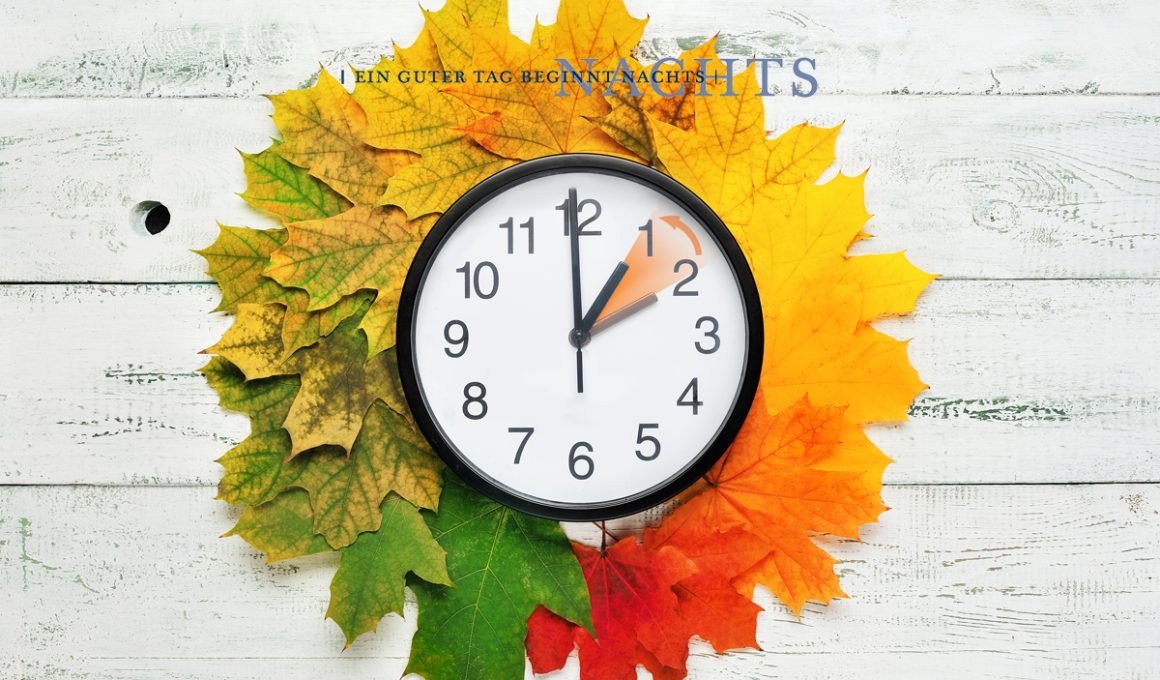
In Germany, the clocks are changed twice a year. Daylight saving time begins on the last Sunday in March. That night, the hands jump from 2 to 3 o’clock. So we lose an hour. On the last Sunday in October, we return to standard time. Then the clocks are set back from 3 to 2 o’clock, and we get back the hour we had lost.
The dates for the daylight saving time changes in 2026, 2027, and 2028 are:
| Year | Daylight Saving Time – Set the Clock Forward | Winter Time – Set the Clock Back |
| 2026 | Sunday, March 29, 2026 | Sunday, October 25, 2026 |
| 2027 | Sunday, March 28, 2027 | Sunday, October 31, 2027 |
| 2028 | Sunday, March 26, 2028 | Sunday, October 29, 2028 |
By the way, standard time is actually our regular time, officially known as Central European Time (CET). During daylight saving time, the clocks are set forward one hour. As a result, the sun sets later according to the clock, and we can make better use of the long summer evenings.
The Best Mnemonics for Daylight Saving Time
Whether it’s vivid comparisons, wordplay, or simple number sequences, there are many different ways to remember the time change. We’ve put together six particularly memorable mnemonics.
1. The Garden Furniture Rule: Put it out in the spring, take it back in the fall
In the spring, the patio furniture goes OUTSIDE the house; in the fall, it’s put BACK inside the shed. This simple rule can also help you remember when the clocks change. If you don’t have a garden, you can imagine the chairs at an outdoor café instead. In the spring, they’re set out on the sidewalk; in the fall, they’re brought back inside.
2. Spring forward, fall back
This English mnemonic is a nice play on words. “Spring” means both “spring” (the season) and “to jump,” while “fall” in American English refers to “fall” (the season) but also means “to fall.” So the clock “jumps” forward one hour in the spring and “falls” back again in the fall.
3. The Thermometer Rule: PLUS in the summer, MINUS in the winter
In the summer, the temperature on the thermometer goes up; in the winter, it goes down. The same is true for the time: In the spring, the clock is set forward one hour; in the fall, it is set back one hour. So remember: Rising temperatures mean setting the clock forward one hour; falling temperatures mean setting it back one hour.
4. The 2-3-2 Rule
All you need to remember here are three numbers: 2-3-2. In the spring, the clock jumps from 2 a.m. to 3 a.m. at night; in the fall, it goes back from 3 a.m. to 2 a.m. It couldn’t be simpler—especially for people who are good at memorizing number sequences.
5. Always Looking Forward to Summer
Here’s a particularly handy mnemonic that doesn’t involve any numbers at all: In the spring, summer is still ahead of us, so we set the clock forward. In the fall, summer is already behind us, which is why we set the clock back. So you always use the position of summer in the course of the year as your guide.
6. The Sleep Rule: One hour less in the spring, one hour more in the fall
This mnemonic should appeal especially to late sleepers. When daylight saving time begins, we technically lose an hour of sleep; when we switch back to standard time, we get it back. Whether that actually means we sleep longer, however, is another matter entirely. After all, our sleep patterns are governed by our internal clock rather than by the hands on the alarm clock.
Why do we change the clocks in the middle of the night?
There’s a very practical reason for this: In the early morning hours, relatively few people are out and about. Most people are asleep, stores are closed, and public transportation is also less crowded. This makes it possible to change the time without disrupting daily life too much.
The fact that clocks are set forward by 2 hours in the spring and by 3 hours in the fall is also no coincidence. Within the EU, the change takes place uniformly at 1:00 Coordinated Universal Time (UTC). In Germany, this corresponds to 2:00 CET in the spring and 3:00 CEST in the fall.
Which watches automatically switch to daylight saving time or standard time?
In the past, when the clocks changed, you had to go through the whole house and set all the clocks by hand. Today, many devices do this on their own. Smartphones, tablets, computers, and smartwatches usually adjust automatically, provided the corresponding feature is enabled.
Radio-controlled clocks also adjust themselves automatically. They receive a time signal, which in Germany is provided by the Physikalisch-Technische Bundesanstalt (PTB). However, this requires that the clock be able to receive the signal reliably.
The situation is different for traditional wristwatches, analog wall clocks, and many household appliances. Ovens, microwaves, and older car stereos, in particular, often still need to be set manually.
It’s therefore a good idea to double-check the time after the clocks change. After all, no one wants to accidentally wake up an hour too early or too late on Monday morning.
One more hour of sleep—is that really true?
When the clocks are set back in the fall, many people look forward to that extra hour of sleep. In fact, the night is technically an hour longer. But our internal clock can’t simply be reset at the push of a button. The short-term discomfort can sometimes feel like jet lag. That’s why it’s also referred to as “mini-jet lag.”
For example, someone who normally wakes up at 7 a.m. might find themselves awake as early as 6 a.m. after the time change. At first, the body continues to follow its usual rhythm. Early risers, in particular, therefore sometimes have trouble adjusting to standard time.
Things are different in the spring. When the clocks are set forward, the nights become shorter, and many people have to get up earlier than their natural sleep cycle would allow. As a result, they often feel tired and sleep-deprived the next morning.
If you’re sensitive to the time change, you can start adjusting your bedtime gradually a few days in advance. In the fall, this means going to bed a little later; in the spring, a little earlier. Regular bedtimes and plenty of daylight also help our internal clock adjust to the changed daily rhythm.
For more information on how this affects our sleep, see our blog posts on the switch to daylight saving time and the switch to standard time.